
I know what it feels like to be excluded because of ethnicity, color, immigrant status, and religion. I grew up in an America that was far less tolerant than the one we live in today. Many of my worst childhood memories are school-based, from elementary to high school. America is growing more diverse year after year, and I hoped my children would fare better than I did in school.
The America where my wife and I raised our children is much better than the one we experienced. My kids are young adults who fared much better than I did, but it was not perfect. They have their own stories of experiencing intolerance. It was hard for me as a father to see them go through those experiences, especially since I hoped so hard that we would be past all of that nonsense.
This has informed my commitment to diversity, equity, and inclusion (DEI) in our public schools. It is necessary because racism and bigotry still exist in our communities. If we were a homogeneous society, DEI might not be as important. Once we evolve into a culture that embraces Americans’ differences as assets, DEI may be less critical as a teaching tool. I wish we were there already. But we are not.
My support for DEI is also informed by the various privileges I enjoy. I have been able to give my children many things I did not have. That is a privilege – for me and my children. I worked hard in school, earned my degrees, and excelled in my career. Nothing was handed to me. Still, I know that others with more ability, who worked just as hard and were capable of even more, did not achieve my level of success because of external factors over which they had little control. When I see someone hurting, suffering, or in need, I can only think, “But for the Grace of God, there go I.” It is a matter of equity.
I also support DEI because I do not know what it is like to face misogyny, anti-LGBTQ bigotry, or having different abilities from the majority of students. I never had to struggle with these challenges. While I do not know what it is like, I have empathy for those who face these struggles, and I want to contribute to creating an environment where they, too, can succeed unimpeded by bias, intolerance, and ignorance.
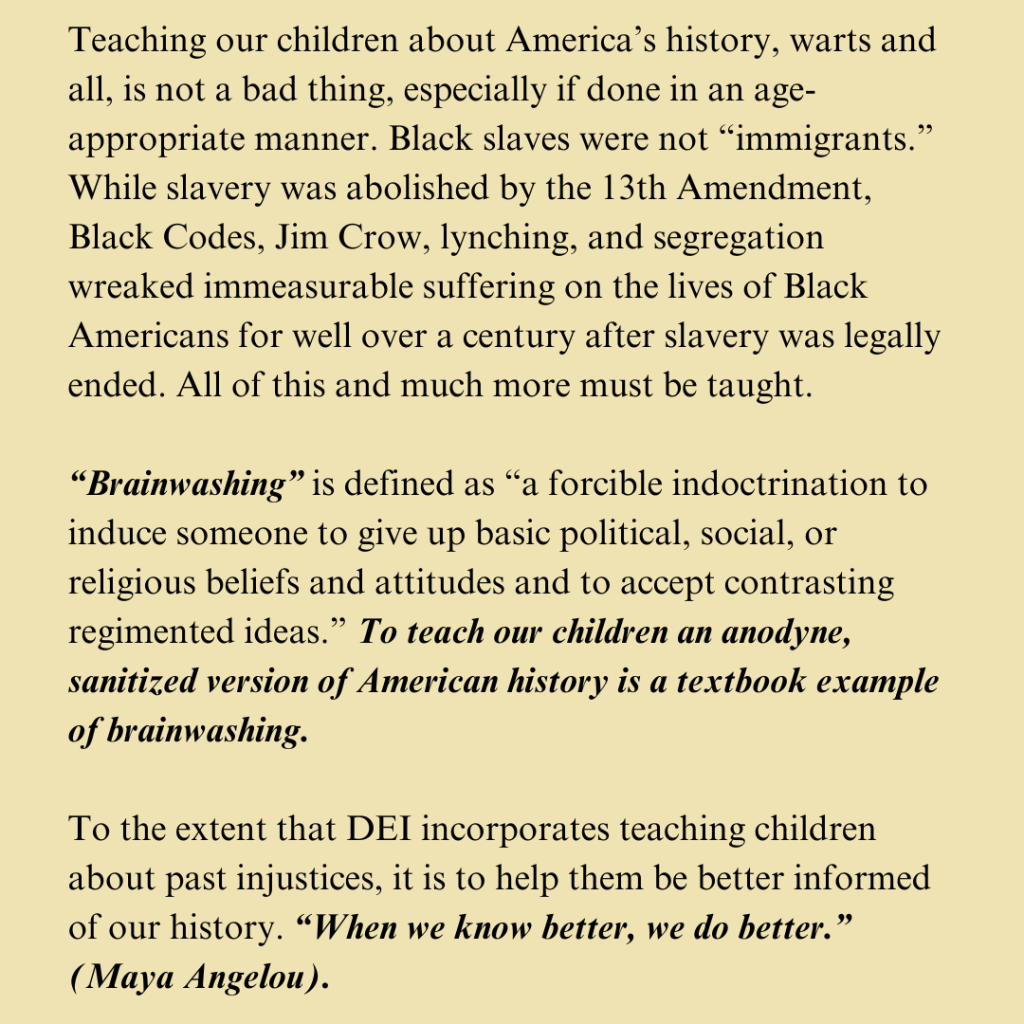
To be crystal clear (because some will see nefarious ideas in DEI programs), there is nothing wrong with having European heritage, being white, or being Christian. One can support DEI without self-loathing. For example, I certainly do not feel guilty for being a heterosexual cisgender male. Nonetheless, I can empathize with the children and families who are part of the LGBTQ community. I wish for them the same feeling of belonging that I feel.
I have experienced being a minority and benefited from being part of the majority. Both experiences inform my support for DEI in our public schools.
Illinois has laws about what should be taught; some mandates fall within the DEI framework. School board policies promote a diverse and inclusive environment, including hiring and retaining diverse teachers. Equity in schools means that each student has access to the resources and rigor needed. These needs must not go unmet due to “race, ethnicity, dominant language, disability, gender, sexual orientation, religion, family background, and/or family income.” Our school district recently launched an annual diversity celebration called “Culture Blast,” which showcases our students’ many cultures and backgrounds.
Fostering diversity, equity, and inclusion without a Board of Education that conceptually supports DEI is challenging.
I have no qualms about stating unequivocally that I support DEI. Hatred, bigotry, and intolerance divide us. DEI efforts, appropriately done, seek to teach our children that we may have different skin colors, abilities, gender identities, religions, and cultural practices, celebrate other holidays, and love whom we love, yet still be part of a shared community.
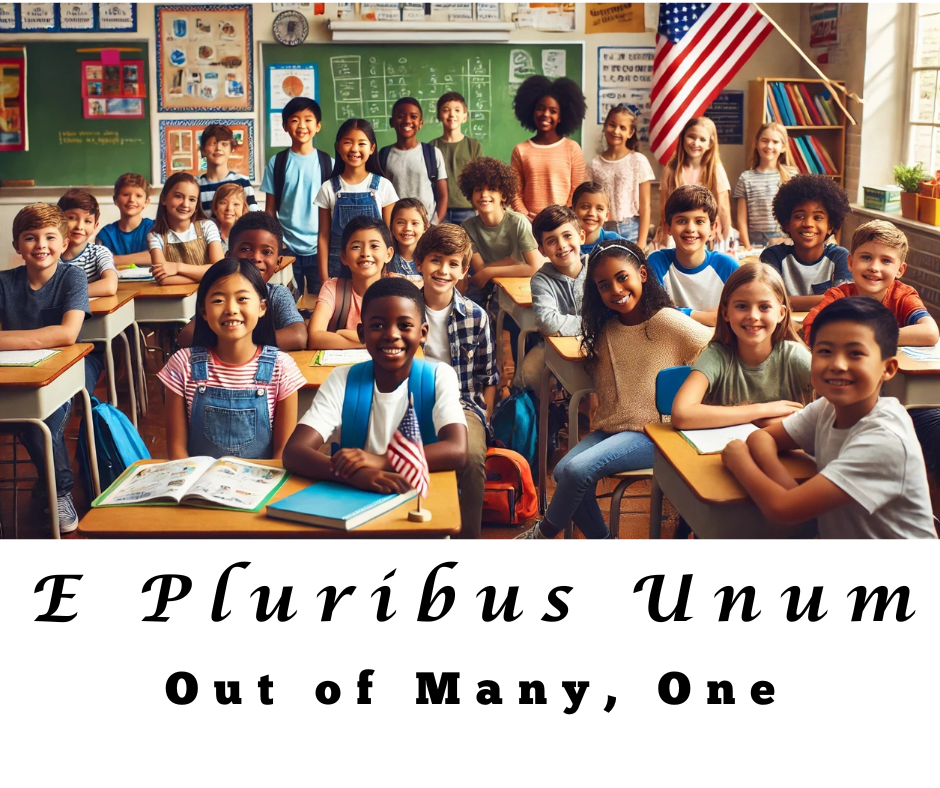
DEI in our public schools is essential to our nation’s motto, E Pluribus Unum (Out of Many, One). I hope that, out of our ever-expanding diversity, we emerge as a unified nation bound by our shared humanity and not driven apart by the things that make us unique.
 JUNAID AFEEF